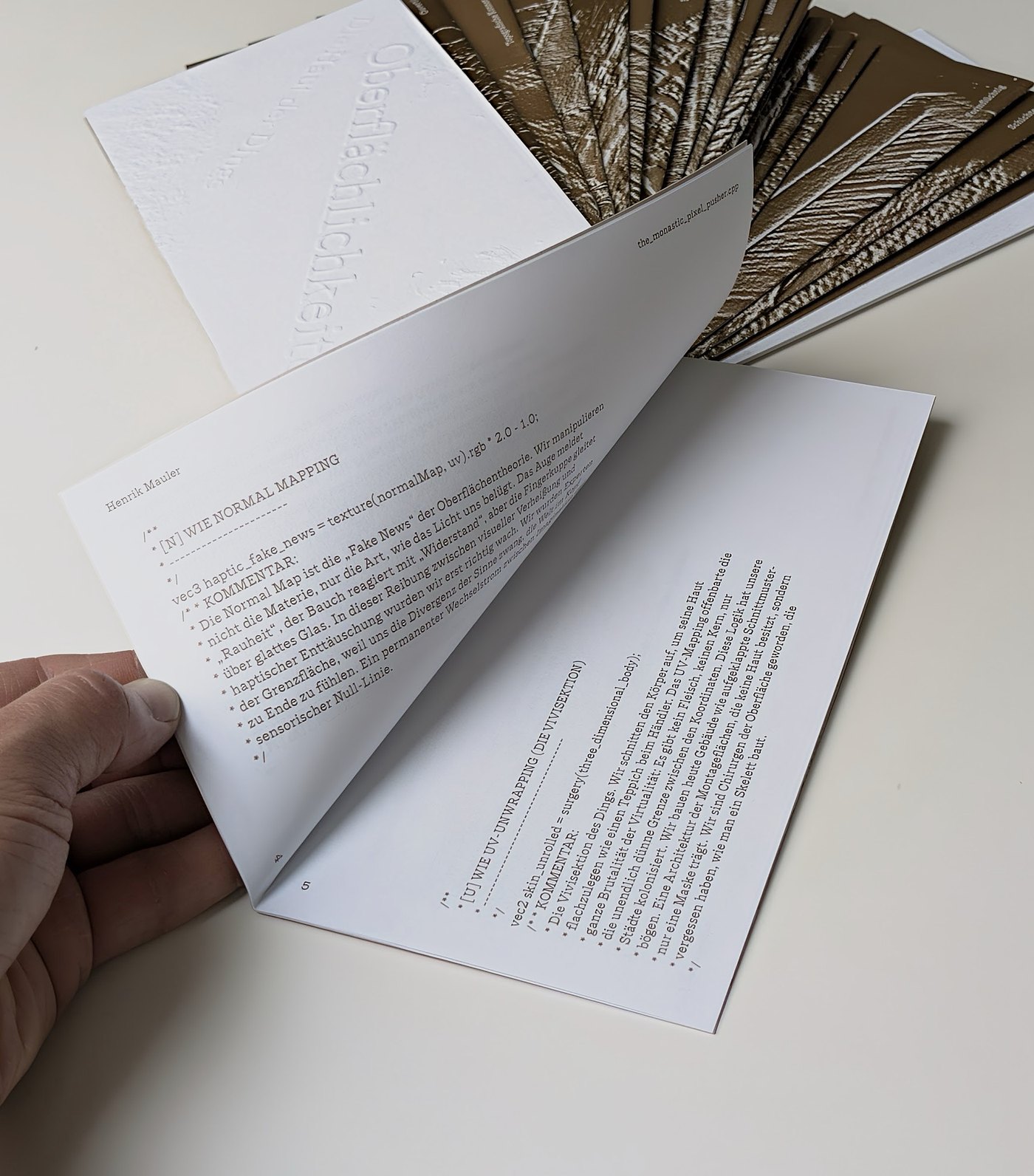
Written as source code, A to Z. For Oberflächlichkeiten – Die Haut der Dinge, the book by Dieter Hofmann on his farewell as Dean of Burg Giebichenstein, Halle, 2026. English version, freely adapted from the German original.
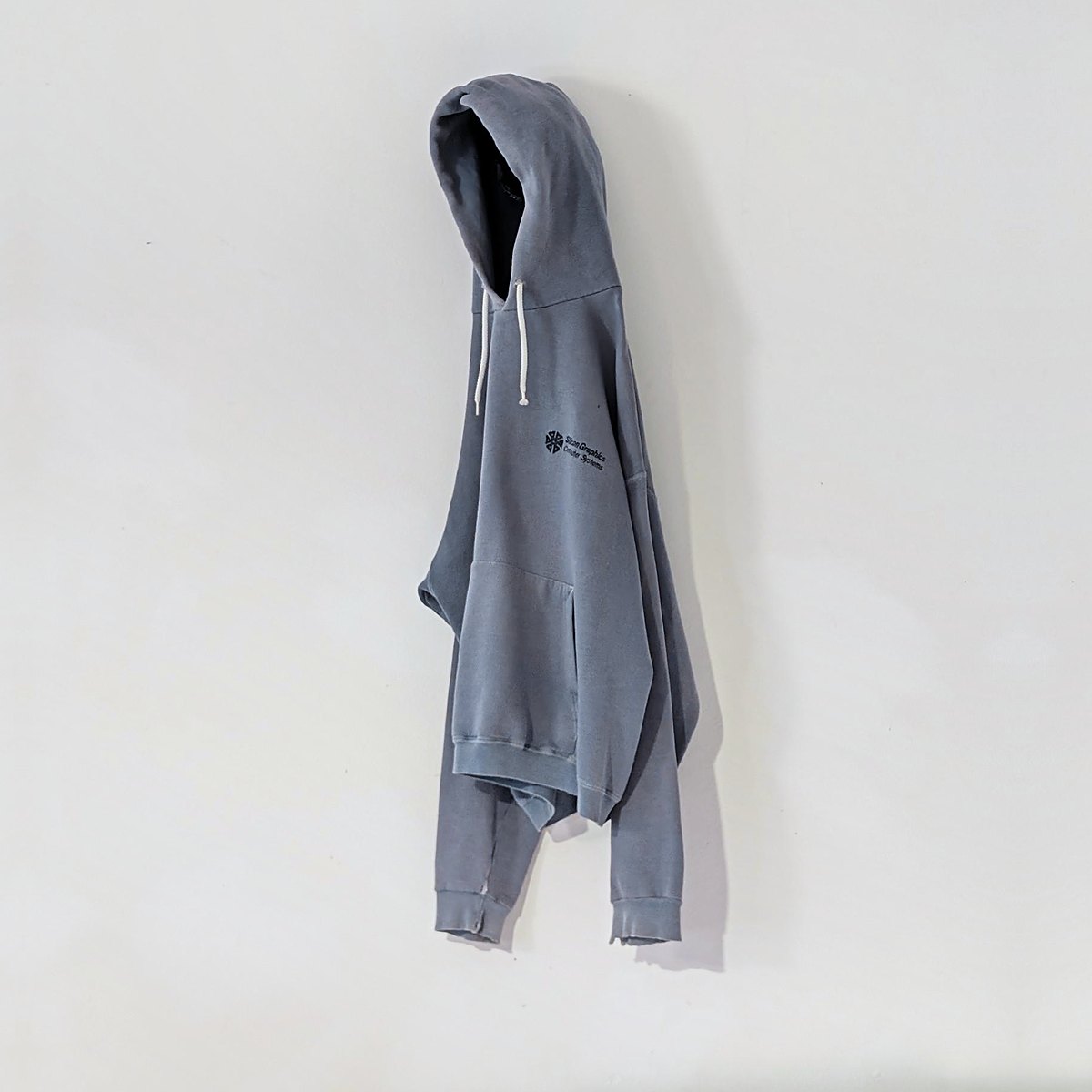
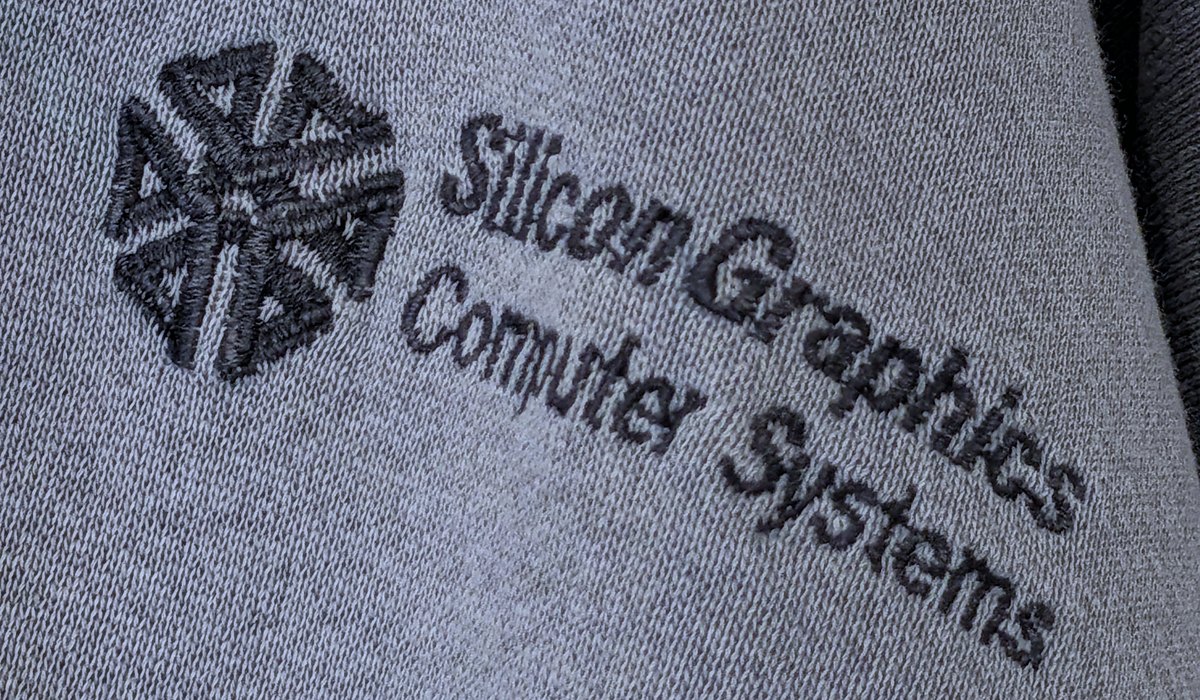
Shell of the Ghost. A Silicon Graphics merch sweater, dyed blue and worn like a uniform in 1999, the year of Data Monastery.
/* ************************************************************************** * PROJECT: OBERFLÄCHLICHKEITEN – THE SKIN OF THINGS * FILE: the_monastic_pixel_pusher.cpp (FINAL_GLOSS) * STATUS: HYPER-STYLIZED / HIGH-CAFFEINE / NEURO-DIVERGENT * **************************************************************************/#include<Sensuality_Simulation.h>#include<Vector_Voodoo.h>/** * [A]AS IN ANTI-ALIASING * ----------------------- */floataesthetic_prozac=smoothstep(reality-jitter,reality+jitter,vision);/* * COMMENT:Anti-aliasing was our aesthetic sedative. We could not stand the "jaggies": those little staircases told the truth, and the truth was silicon, naked and binary. So we invented the algorithmic soft-focus lens, a diplomatic corridor of in-between colours where an edge could be put down gently. The eye saw a blur; the brain hallucinated tenderness. We smoothed the world until we slipped off it. If you have never sat at three in the morning before an untouchable digital desert, you will never quite understand the sublime grit of a concrete block. We only learned to feel when the picture stopped answering back. *//** * [D]AS IN DISPLACEMENT MAPPING * ------------------------------ */vertex.xyz+=normal*texture(heightMap,uv).r*OBSESSION_MULTIPLIER;/* * COMMENT:The Frankenstein moment of the render engine. The monitor glass stayed insultingly flat, so we flogged the polygons out of their two-dimensional comfort zone until they buckled into relief. It's alive. Displacement mapping is a prosthesis for sensuality, a haptic placebo: we raised cathedrals of simulated dust and digital grime, only to numb the phantom pain of a missing sense of touch. Light was made to do the work of our hands, while the hands themselves wasted away on ergonomic chairs. *//** * [M]AS IN MESH DENSITY (THE HUNGER OF THE PIXEL MONKS) * ------------------------------------------------------ */mesh.subdivide(neuro_divergence_factor>9000?HIGH:EXTREME);/* * COMMENT:The polygon arms race. We honestly believed that truth was a question of quantity: one more subdivision and the model would start to breathe, or at least give off a faint smell of leather. A fatal, almost touching mistake. It took a very particular, gloriously neurodivergent talent to spend thousands of hours bending wires that did not exist. That narrow place where code voodoo met the gut's urge to give things form was a nature reserve for savants. We pixel monks chiselled pictures out of nothing, line by line, like scribes copying a gospel nobody had written yet. With AI, the craft is going extinct; it will go down in history as a solitary, handmade event. Never to be repeated. And we were there. *//** * [N]AS IN NORMAL MAPPING * ------------------------ */vec3haptic_fake_news=texture(normalMap,uv).rgb*2.0-1.0;/* * COMMENT:The normal map is the fake news of surface theory. Nothing about the matter changes, only the way the light lies about it. The eye reports "rough", the gut braces for "resistance", and the fingertip slides across smooth glass. In that friction between a visual promise and a tactile letdown, we finally woke up. We became experts of the boundary layer, because our senses disagreed and someone had to finish feeling the world inside our heads. An alternating current, forever, between imagination and the flatline of the senses. *//** * [U]AS IN UV UNWRAPPING (THE VIVISECTION) * ----------------------------------------- */vec2skin_unrolled=surgery(three_dimensional_body);/* * COMMENT:The vivisection of the thing. We sliced the body open and spread its skin out flat, like a rug laid out by a carpet dealer. UV mapping showed virtuality at its most brutal: no flesh, no core, only an infinitely thin border running between coordinates. Then the logic moved into our cities. We now put up buildings like unfolded sewing patterns, an architecture of cladding panels that wears a mask instead of a skin. We became surgeons of the surface and forgot how to build a skeleton. *//** * [V]AS IN VOXEL (THE PIXEL WITH A BEER BELLY) * --------------------------------------------- */Voxelsubstance=volume_render(flesh_and_code);// deep./* * COMMENT:The voxel was always the scruffy heavyweight, the smooth polygon's sparring partner. It sees the world not as a hollow shell but as volume: a "flesh pixel". It marks the moment we got sick of superficiality and realised that the skin of things needs an inside to be believed. The voxel is not a picture of matter; it is digital matter itself. In it lives the hope that beauty is not skin-deep after all, but sits in the hard core of the volume. A certain Slovenian philosopher would add a warning: freedom lies in becoming the other, not in staring inwards. Dig too deep into yourself and you hit a monstrous core. Which, as the kids say, is deep. *//** * [Z]AS IN ZERO (SYNTHESIS AND SWAN SONG) * ---------------------------------------- */exit(0);// lift the needle./* * COMMENT:Handmade CG rendering is dead, as dead as vinyl, which is to say very much alive in a niche, and climbing, because AI has shown how rare this manual alliance between human and code really was. The computer was never an automaton. It was a stubborn tool, a palette knife that talked back. With us, a species of designers dies out: people who thought in coordinates and felt in textures, right down in the gut. *But the end is a release. The new generation is working on a synthesis with no losers, reconciling freely shapeable virtuality with a disarming, almost aggressive sensuality. Nobody designs static shells anymore, only visceral experiences, where the line between abstract code and a trembling gut feeling collapses. The ping-pong is over. The fusion has begun. When the monitor goes black, the skin finally starts to breathe. */
In print: Oberflächlichkeiten – Die Haut der Dinge, Burg Giebichenstein, Halle, 2026. The text is filed under Code.